News
What Cut Resistance Level is Best for Precision Engineering? A Risk-Based Selection Guide
In the precision engineering industry, a worker’s hands are their most valuable “tools.” A single oversight when handling turning chips, metal shards, or razor-sharp cutting blades can lead to severe injuries, directly impacting productivity and a company’s safety reputation.
However, a major challenge in occupational safety management is the trade-off: higher cut resistance levels often come with increased thickness, which reduces dexterity. So, how do you select the optimal protection? Let the experts at Sotaville guide you through practical risk-based scenarios below.
The Relationship Between Dexterity and Cut Resistance
Precision engineering requires workers to handle intricate, small components that demand excellent tactile sensitivity. If you choose gloves with a cut level that is too high (such as thick steel-core fibers), workers may struggle to grip small screws or adjust CNC machinery. This leads to decreased productivity and may even create new hazards if bulky gloves get caught in rotating machinery.
Conversely, choosing a level that is too low poses a significant risk of injury from steel chips or sharp component edges. Therefore, the golden rule at Sotaville is: “Safe enough to protect – Thin enough to perform.”
Guide to Selecting Cut Levels Based on Work Stages
Based on the EN 388:2016 standard and Newton force measurements, we categorize the appropriate protection levels for specific job roles as follows:
Small Component Assembly and Quality Control (QC)
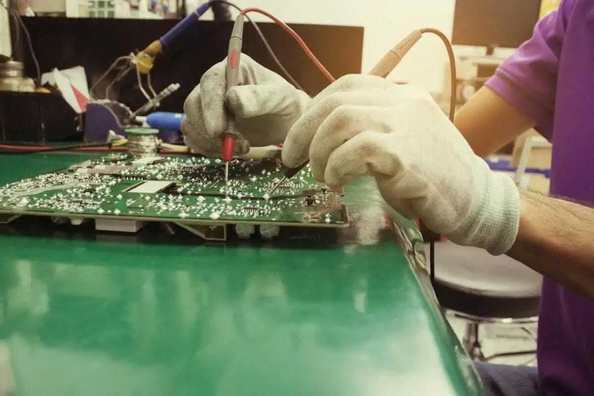
In this area, the risk of direct, heavy impact cutting is low, but the frequency of contact with sharp edges or burrs (bavia) after machining is very high.
-
Recommended Level: Level 1 or Level 2.
-
The Solution: Thin PU-coated or Nitrile Microfoam gloves with a 15-18 gauge knit. The ultra-thin coating provides maximum tactile sensitivity, making it easy to handle small parts while ensuring good abrasion resistance.
CNC Machining, Turning, Milling, and Grinding
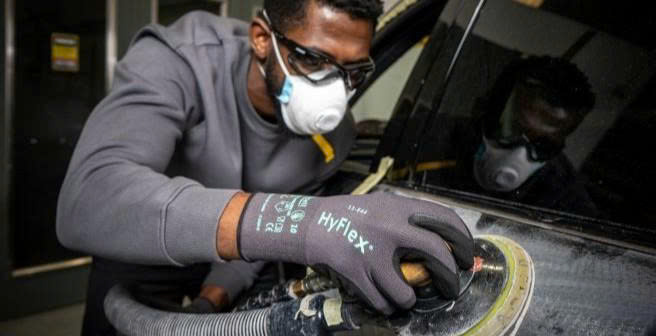
This is a medium-to-high risk environment due to the constant presence of metal swarf (chips) and sharp edges created during the cutting process.
-
Recommended Level: Level 3.
-
The Solution: This is considered the “sweet spot” for the precision engineering industry. Level 3 gloves provide a perfect balance: enough strength to prevent most accidents from metal shards while maintaining the dexterity needed to operate complex machinery.
Blade Replacement, Large Sheet Metal Handling, or Heavy Maintenance
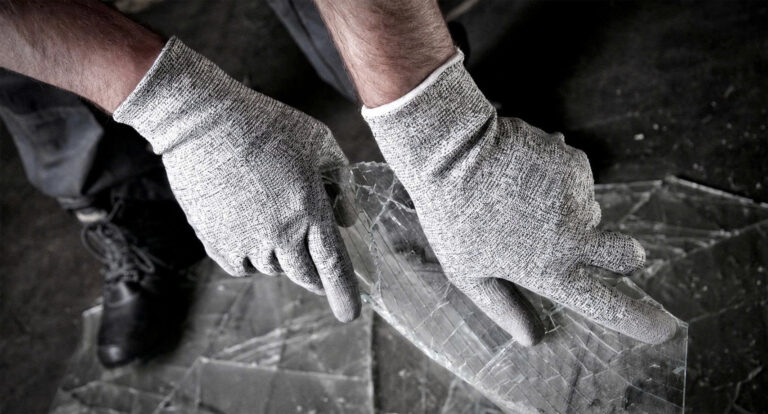
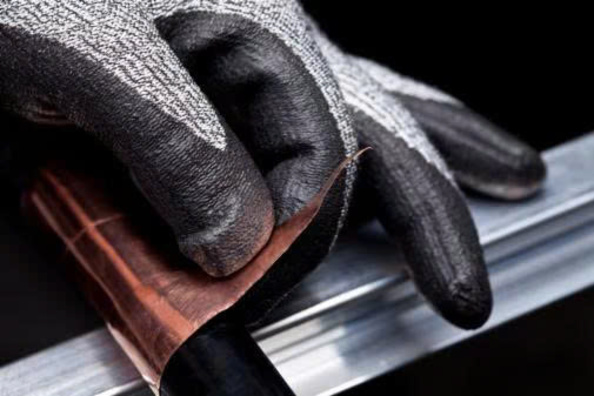
When coming into direct contact with machine cutting blades or large steel plates with razor-sharp edges, the risk is extreme.
-
Recommended Level: Level 4 or Level 5.
-
The Solution: High-performance technical fibers (such as HPPE or Kevlar) are mandatory. Premium glove lines like Ansell HyFlex or 3M available at Sotaville achieve Level 5 protection while maintaining breathability, keeping workers comfortable during high-intensity, long-duration shifts.
A 3-Step Process for Factory Glove Selection
To optimize occupational safety costs for Q2 and beyond, businesses should follow this evaluation process:
-
Identify the Cutting Hazard: What is the sharp object? If it is a heavy object with high pressure, you must prioritize Level 4 or higher.
-
Evaluate the Work Environment: Is the environment oily (due to cutting fluids)? If so, gloves must have a Nitrile palm coating to enhance grip and prevent slips that lead to accidents.
-
Field Test: Do not rely solely on technical specs. Contact Sotaville for samples. Worker feedback on comfort and grip is the most accurate metric for investment efficiency.
Sotaville – Your Partner for Comprehensive Safety Solutions
As a leading provider of safety systems, Sotaville is committed to delivering optimal solutions for the precision engineering industry:
-
Genuine Products: Full CO/CQ certification from Ansell, 3M, Bosch, Honeywell, and more.
-
Cost Optimization: Expert consultation on matching product codes to specific risk levels, extending glove lifespans by 2-3 times.
-
Technical Support: On-site factory surveys to build safety solutions that meet international standards.
Choosing the right cut-resistant glove is not just about protecting workers—it is about protecting the sustainability of your business. Do not let workplace accidents disrupt your production schedule.
CONTACT US FOR EXPERT CONSULTATION AND WHOLESALE QUOTES:
SOTAVILLE JOINT STOCK COMPANY
-
Hotline: 0889 588 080
-
Support Email: info@sotaville.com